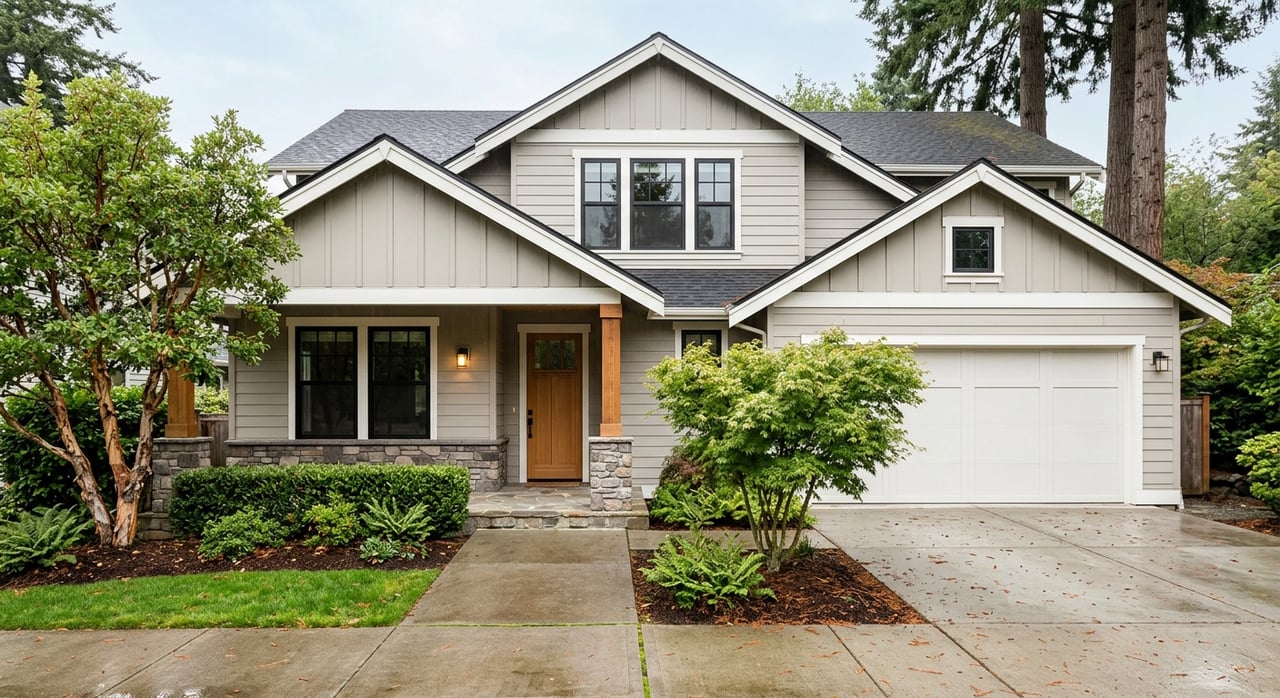
Buying your first home in Vancouver, WA can feel exciting right up until the options start blurring together. One neighborhood offers older character near downtown, another has newer suburban layouts, and all of it has to fit your budget, commute, and long-term plans. If you want a clearer way to narrow your search, this guide will help you understand what to compare before you make your first move. Let’s dive in.
Start With Vancouver Market Reality
If you are buying your first home in Vancouver, it helps to begin with the pace of the market. Redfin reports a median sale price of $490,000 over the last three months, with homes selling in about 20 days and averaging two offers.
That does not mean you need to rush into the wrong home. It does mean you will benefit from making key decisions early, especially around budget, financing, and the parts of Vancouver that fit your daily life best.
Vancouver is also a growing city. The city reports 205,100 residents and 85,374 households, and its adopted comprehensive plan projects 81,000 more people by 2045 and a need for at least 38,000 additional homes.
For a first-time buyer, that growth matters because supply can stay competitive over time. It is one reason to stay organized and realistic as you compare homes, locations, and monthly costs.
Define What First Home Means
Your first home does not need to be your forever home. In many cases, the better question is not “Is this perfect?” but “Does this support the life I live now and the next few years ahead?”
That usually means balancing four things:
- Monthly payment
- Commute or travel patterns
- Home style and maintenance needs
- Access to the places you use most
Vancouver gives you a wide mix of housing types. The city identifies single-family homes, duplexes, ADUs, triplexes, six-plexes, townhomes, courtyard apartments, and cottage housing, which means your search can be broader than just detached houses.
Match the Neighborhood to Your Lifestyle
One of the biggest first-time buyer mistakes is focusing only on the house and not enough on the area around it. In Vancouver, neighborhood fit can change your experience just as much as square footage or finishes.
Urban Core Options
If you want a more central, connected setting, the urban core offers some of Vancouver’s clearest character. Esther Short is the city’s commercial, cultural, financial, and municipal center, while nearby areas like Hough, Hudson’s Bay, and Shumway each offer a different mix of older homes and access to downtown activity.
Hough is known for early 20th-century bungalows, four squares, and Victorian homes. Hudson’s Bay includes older homes, apartments, condos, and ADUs, with housing from the late 1800s, early 1900s, and WWII era.
Shumway is especially notable for buyers who value transportation options. The city describes it as walk, bike, and transit friendly, and Hough also notes that many residents walk, bicycle, or use public transit.
East and Southeast Options
If you picture a more suburban setup, east and southeast Vancouver may be worth a closer look. These areas tend to include newer patterns, residential streets, and easier side-by-side comparison between homes.
Fisher’s Creek has a mix of builders, maturing trees, cul-de-sacs, and walkable access to local shops. Northfield includes duplex condominiums and single-family houses, while Evergreen Highlands is known for many 1950s to 1970s ranch homes and a rural feel.
Cascade Highlands is mainly residential and has access to transit and major highways. Fisher’s Landing East is another useful southeast search area for buyers comparing planned suburban communities and nearby parks.
West and River-Edge Options
If you are drawn to river views, historic texture, or mixed housing patterns, west-side and river-edge neighborhoods can offer something different. Columbia River centers on historic Old Evergreen Highway, river views, and historic homes.
Fruit Valley includes a mix of duplex condominiums and single-family homes, along with the city’s largest set of remaining WWII housing. Southcliff, redeveloped from WWII temporary housing in the late 1950s, remains a single-family residential enclave.
Compare Commute Before You Commit
Commute convenience in Vancouver is not one-size-fits-all. It depends heavily on where you live, where you work, and whether you drive, ride transit, or need flexibility for both.
WSDOT identifies the I-5 corridor between the I-205 interchange and the Interstate Bridge as a key commute and economic corridor. In 2023, that eight-mile southbound morning trip averaged 14 minutes, while the reliable travel time was 30 minutes.
On I-205, the eight-mile morning trip between the I-5 interchange and the Glenn Jackson Bridge also averaged 14 minutes in 2023. Those numbers are a useful reminder that averages do not always tell the whole story when timing matters.
A smart first-time buyer move is to test the trip yourself before writing an offer. Try your likely morning commute, evening return, and a weekend errand run so you can see how the location feels in real life.
Transit and Daily Access
If transit matters, compare neighborhoods carefully. C-TRAN provides local bus service in Clark County, regional service to the nearest MAX light-rail station, and express commuter service to downtown Portland.
Its on-demand Current service covers zones including WSU Vancouver and Salmon Creek, Rose Village, Camas and Washougal, the Port of Vancouver, and Ridgefield and La Center. Even within the same city, some neighborhoods are much easier to navigate without depending on a car for every trip.
Budget for the Full Monthly Cost
The price of the home is only part of the affordability picture. Your monthly payment may include principal, interest, property taxes, mortgage insurance, homeowners insurance, flood insurance, and possibly HOA fees.
That is why first-time buyers need to compare homes based on the full payment, not just the list price. Two homes with similar prices can feel very different once taxes, insurance, and dues are added in.
HOA fees deserve special attention. The CFPB notes that HOA dues are usually paid directly to the HOA and can range from a few hundred dollars a month to more than $1,000.
It is also important to know that Vancouver’s neighborhood associations are not the same thing as private HOAs. The city has 71 official neighborhood associations, and they are city-recognized independent organizations rather than private homeowner associations.
Cross-River Budget Decisions
If you are comparing Southwest Washington with Oregon options, keep the tax structure in mind. Washington has no state income tax, while Oregon has no general sales tax.
Washington also imposes real estate excise tax on sales of real property. That may become more relevant later when you think about resale or compare total transaction costs across state lines.
Get Preapproval Early
In a market where homes can move in about 20 days, preapproval is part of being ready. The CFPB recommends getting at least three preapproval offers and notes that sellers often require preapproval letters.
It is also important to remember what preapproval is and what it is not. A preapproval letter is not a guarantee, and many letters expire after 30 to 60 days.
Timing matters here. If you get preapproved too early, you may need to refresh paperwork before you are ready to offer. If you wait too long, you may lose time when a good fit comes on the market.
For some first-time buyers, education and assistance programs may also be part of the plan. Washington State Housing Finance Commission materials say buyers can combine Commission mortgage products with homebuyer education and downpayment assistance.
Look Closely at Condition and Future Flexibility
When you are choosing between an older home with charm and a newer home with a more current layout, condition matters. The CFPB advises scheduling a home inspection as soon as possible so major issues can surface early enough for you to decide whether to proceed.
That step is especially important in older Vancouver neighborhoods where original systems, roofs, or foundations may be part of the tradeoff for character and location. A beautiful street and a good floor plan still need to work with your repair tolerance and budget.
If you are considering new construction or thinking ahead about long-term property flexibility, zoning can also matter. Vancouver says its updated 2026 to 2045 Comprehensive Plan is scheduled to take effect on July 31, 2026, with a more flexible zoning system citywide.
The city also says you can check zoning by address to see what development may be possible on a parcel. For some buyers, that may shape how they think about future use, surrounding development, or resale potential.
Use Parks and Trails as a Tiebreaker
When two homes feel close on paper, lifestyle details often decide the winner. Vancouver’s citywide network includes 82 parks, 28 natural areas, and more than 20 miles of trails.
That access can be meaningful if you want outdoor space nearby without moving to acreage. Whether you value walking paths, green views, or weekend recreation, it is worth factoring that into your shortlist.
A Simple First-Home Checklist
Before you choose your first home in Vancouver, make sure you can clearly answer these questions:
- What monthly payment feels comfortable when taxes, insurance, and possible HOA dues are included?
- Which neighborhoods best match your preferred home style and daily routine?
- How does the commute feel during the times you would actually travel?
- Are you open to condos, townhomes, duplexes, or other housing types if they improve location or affordability?
- Does the home’s condition match your budget for repairs and maintenance?
- Have you lined up current preapproval and reviewed first-time buyer education or assistance options?
The right first home is usually the one that makes your day-to-day life easier, not the one that checks every dream box at once. A clear process can help you make a confident decision without feeling overwhelmed.
If you want thoughtful guidance as you compare Vancouver neighborhoods, home types, and cross-river options, Kristen Anzellotti is here to help you move forward with clarity.
FAQs
What should first-time buyers know about the Vancouver, WA market?
- Vancouver homes have recently sold at a median price of $490,000, in about 20 days, with an average of two offers, so it helps to have your budget and preapproval ready before you tour seriously.
Which Vancouver neighborhoods are good to compare for a first home?
- It depends on your lifestyle, but common comparison areas include central neighborhoods like Hough, Hudson’s Bay, and Shumway, southeast areas like Fisher’s Creek and Cascade Highlands, and west-side areas like Columbia River and Fruit Valley.
Are Vancouver neighborhood associations the same as HOAs?
- No. Vancouver’s neighborhood associations are city-recognized independent organizations, while HOAs are private associations that may collect dues and enforce community rules.
How can first-time buyers compare Vancouver commute options?
- Test your likely morning commute, evening return trip, and weekend errands from any neighborhood you are considering, because commute convenience varies by area rather than across the city as a whole.
What costs should first-time buyers budget for in Vancouver, WA?
- In addition to principal and interest, your total monthly housing cost may include property taxes, mortgage insurance, homeowners insurance, flood insurance, HOA dues, and ongoing maintenance or repair costs.
What housing types should first-time buyers consider in Vancouver?
- Along with single-family homes, Vancouver buyers may want to consider condos, townhomes, duplexes, ADUs, triplexes, six-plexes, courtyard apartments, and cottage housing depending on budget and location goals.