Open six tabs and search for the median home price in Camas, Washington. You will get six different answers, and none of them are wrong.
As of late summer 2026, Niche lists Camas at $656,100. Zillow's typical home value sits at $717,897. A Washington brokerage pulling directly from the Northwest MLS reports $762,450 for August. Movoto's June figure comes in at $839,900. A six-month tracker of 338 closed sales puts the median at $824,141. And Orchard's most recent 30-day snapshot shows $1,200,000, up 77.8% year over year.
That last number is the one worth sitting with. A single tool showing a 78% jump in a market where every other source shows prices flat or slightly down is not a sign that Camas suddenly got much more expensive. It is a sign that the tool measured two home sales in a 30-day window, against five the year before. Two transactions is not a market. It is a coin flip that happened to land on a couple of expensive homes.
The Mechanism Behind the Confusing Numbers
Camas is a genuinely thin market. Northwest MLS data shows 72 closed sales across the past 12 months for one brokerage's tracked segment, and a separate six-month tracker following 338 closings counted 61 sales in July 2026 alone. Even at the higher end, that is a small enough sample that a single luxury closing on Lacamas Lake can move a monthly average by tens of thousands of dollars, while the median barely twitches.
This is why median and average tell such different stories here. One July 2026 market update noted that the average Camas listing had spent 133 days on market, while the median was 63. That gap is not a rounding error. It means a cluster of well-priced homes are still moving in about two months, while a smaller group of overpriced or ultra-luxury listings are sitting for four months or more and dragging the average upward. Look at only the average and you would think the market had slowed dramatically. Look at only the median and you would miss that certain price bands are stuck.
The same distortion shows up in price data. A tracker following 338 Camas closings over six months put the median sale at $824,141, but noted the middle half of those sales closed anywhere between $660,000 and $971,400. That is a $311,000 spread sitting inside what is supposed to be the "typical" range, before you even get to the luxury tail above it or the entry-level homes below it.
Add in the fact that every site defines its window differently. Redfin's July 2026 figure covers a trailing three months and showed a median of $825,000, down 3.4% year over year, with homes selling in about 37 days on 2 offers. NWMLS-based brokerage data pulled that same summer showed $762,450 using a slightly different closing window. Neither is fabricated. They are measuring overlapping but not identical sets of transactions, in different time frames, run through different formulas. A single number pulled from any one of them tells you almost nothing about what a specific Camas house is worth.
What Actually Moves the Number: Four Price Tiers
The more useful way to read Camas is by neighborhood, because the city's price range is wide enough to make a citywide median close to meaningless for most buyers.
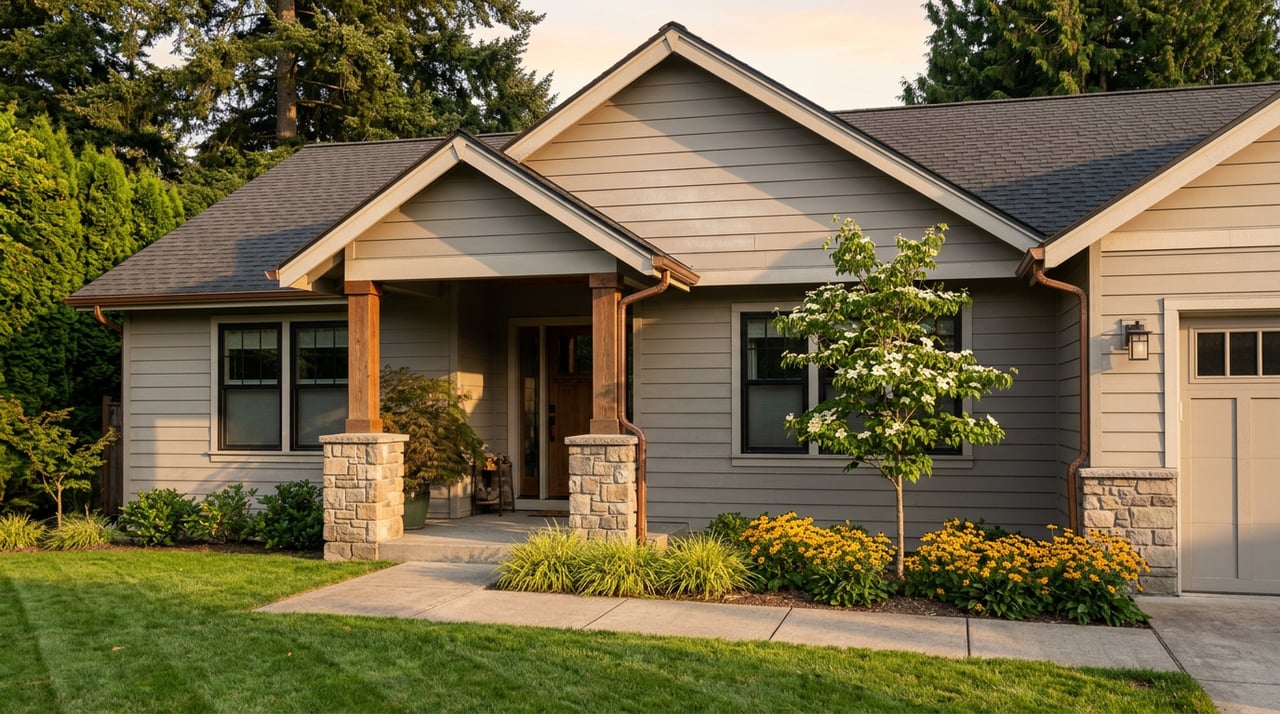
Downtown and the historic core. Craftsman bungalows and early-20th-century homes along NE 4th Avenue sit within walking distance of the city's restaurant row and the historic district anchored by Grains of Wrath Brewing. These are consistently the most accessible entry points in the city, prized for character and walkability rather than square footage.
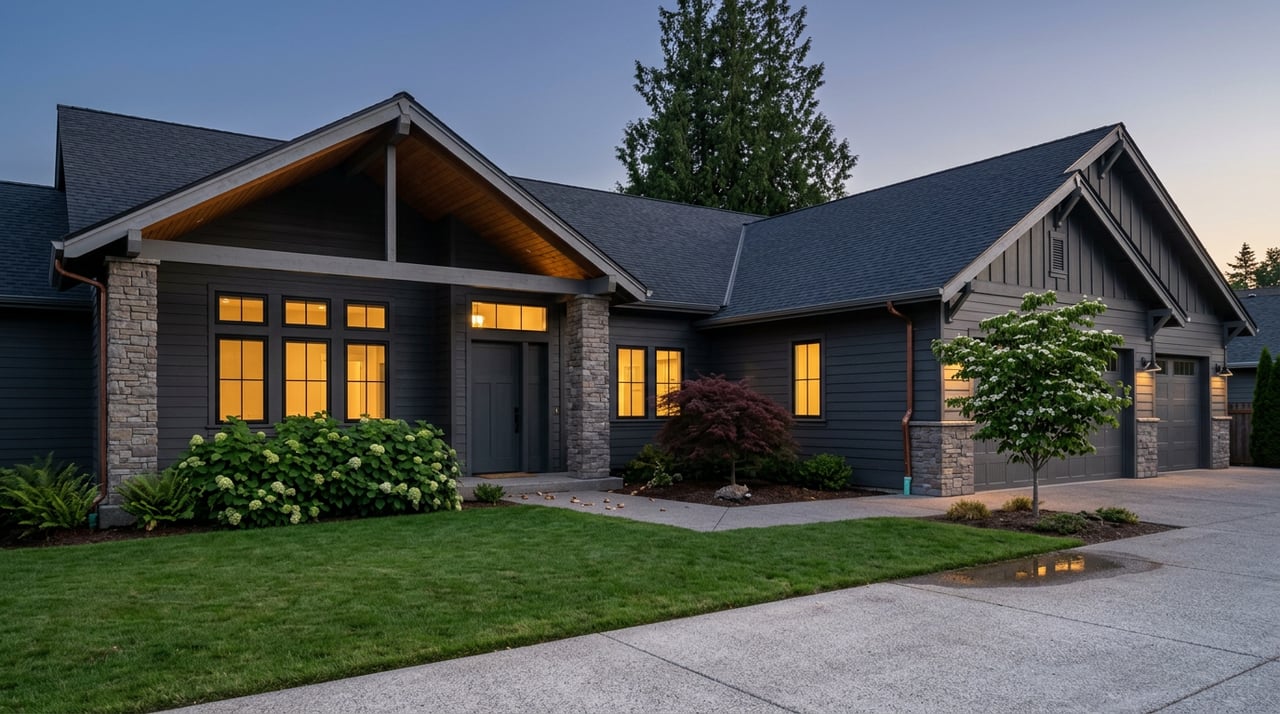
Grass Valley and Deerhaven. These planned family neighborhoods run roughly $680,000 to $950,000. Grass Valley in particular was built around the school-age family buyer, with newer construction and direct access to Grass Valley Park. Belz Place, a 107-home community built between 2017 and 2019 on Prune Hill's lower slope, sits at the accessible edge of this tier, with listing prices typically starting in the $800s and a community pool that is one of only two in Camas's single-family neighborhoods.
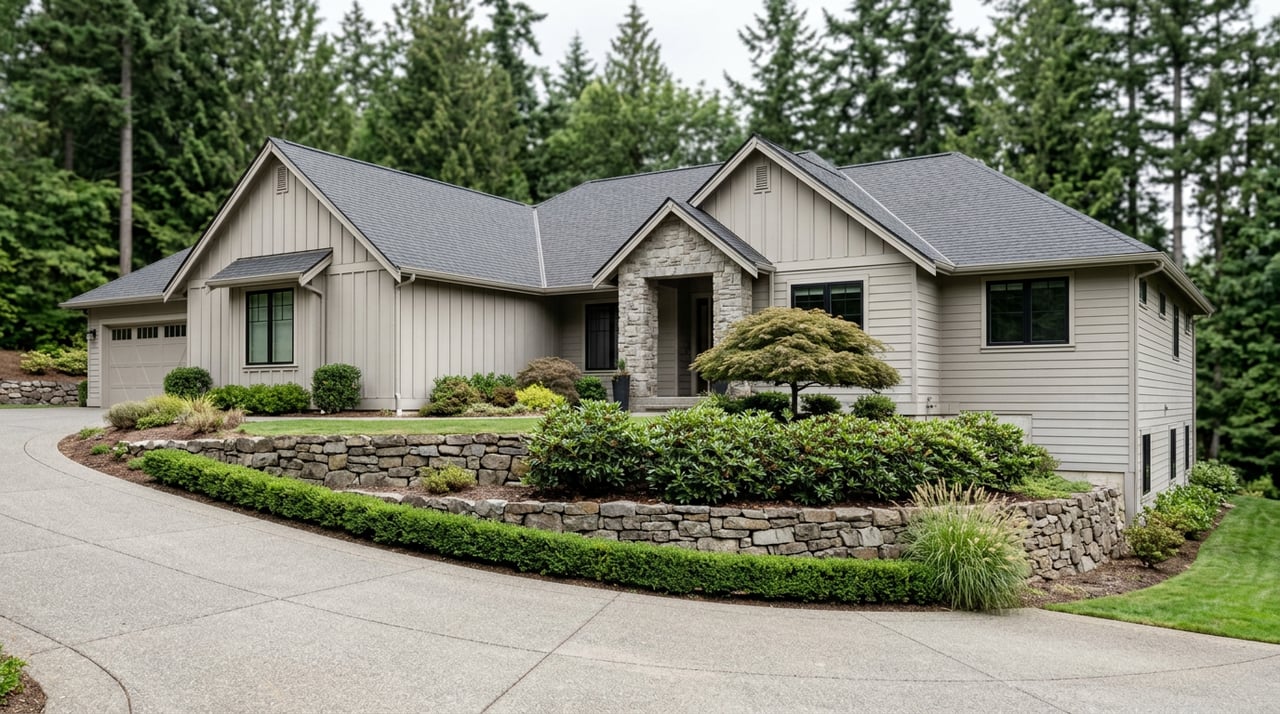
Prune Hill. An extinct volcanic ridge that gives its upper addresses unobstructed views of Mount Hood and the Portland skyline on one face, and Mount St. Helens and the Cascades on the other. Homes here run from roughly $750,000 into the $1.3 million range and beyond, with sub-communities like Grand Ridge, Hunter Ridge Estates, Crown Pointe, and the more isolated Dawson's Ridge, reachable only by NW McIntosh Road, sitting at the top of that band.
Lacamas Shores. A tight, roughly 250-home enclave along the northwest shore of Lacamas Lake, with a private boat launch and a canoe and kayak club that runs $40 a year in dues. Homes closest to the water have traded between $1.4 million and $3.4 million, with the neighborhood's overall median sitting near $1.5 million even though a handful of homes farther from the shoreline dip into the mid six figures.
Line those four tiers up next to the citywide numbers and the wide spreads stop looking like noise. A $762,000 median and a $1.2 million luxury snapshot can both be true in the same month, because they are describing different neighborhoods that happen to share a city limit.
What This Means If You're Comparing Numbers
If you are watching Camas from outside the market, the practical move is to stop treating any single headline figure as a target price and start asking which tier a given home actually belongs to. A Grass Valley resale and a Lacamas Shores lakefront listing are not competing for the same buyer, and averaging them together tells you less than looking at either one on its own.
Current conditions add another layer. As of August 2026, Camas carried about 3.5 months of inventory on 29 active listings, with homes selling at a median sale-to-list ratio of 97.7%, meaning sellers are landing close to asking price but rarely above it. A separate July reading placed the market's action index at 33, which one local update characterized as a slight seller's market where demand still edges out supply, though the gap has narrowed compared to recent years. That is a market where accurate pricing at listing matters more than it used to. Homes priced correctly from day one are still moving in something close to a month. Homes priced off last year's comps, especially in the higher tiers, are the ones stretching the average days-on-market number out toward 130 days and beyond.
For a buyer, that spread is useful. A wide gap between the median and average days on market suggests there is room to negotiate on listings that have already sat for a while, particularly above the $1 million mark. For a seller, it is a warning against anchoring to whichever portal number happens to be highest. The house down the street closing for $1.4 million on Lacamas Shores does not tell you what a Grass Valley resale is worth, even if both addresses say Camas, WA.
Frequently Asked Questions
Which number should I actually trust: Zillow, Redfin, or the MLS-based figure? None of them in isolation. Each pulls from a different time window and a slightly different set of transactions. The more reliable approach is to look at recent closed sales in the specific neighborhood and price band you are targeting, rather than the citywide figure any one site publishes.
Why did average days on market jump so much this year? Because the average gets pulled upward by a smaller number of slow-moving, often higher-priced listings. One July 2026 update put the average at 133 days against a median of 63, which points to a market where well-priced homes are still moving quickly even as overpriced or luxury listings sit.
Does a lower headline price this year mean Camas homes are losing value? Not necessarily. Redfin's trailing three-month figure showed a 3.4% year-over-year dip as of July 2026, while other trackers showed prices roughly flat. In a market this thin, a dip in the headline number is often a reflection of which homes happened to close, not a citywide shift in value.
Understanding which tier your target home sits in, and which window a given statistic is measuring, takes local groundwork that no portal can automate. If you are trying to make sense of the Camas market for a specific address, or you want a second opinion before trusting a number you found online, Kristen Anzellotti is glad to walk through it with you. Let's Connect.